
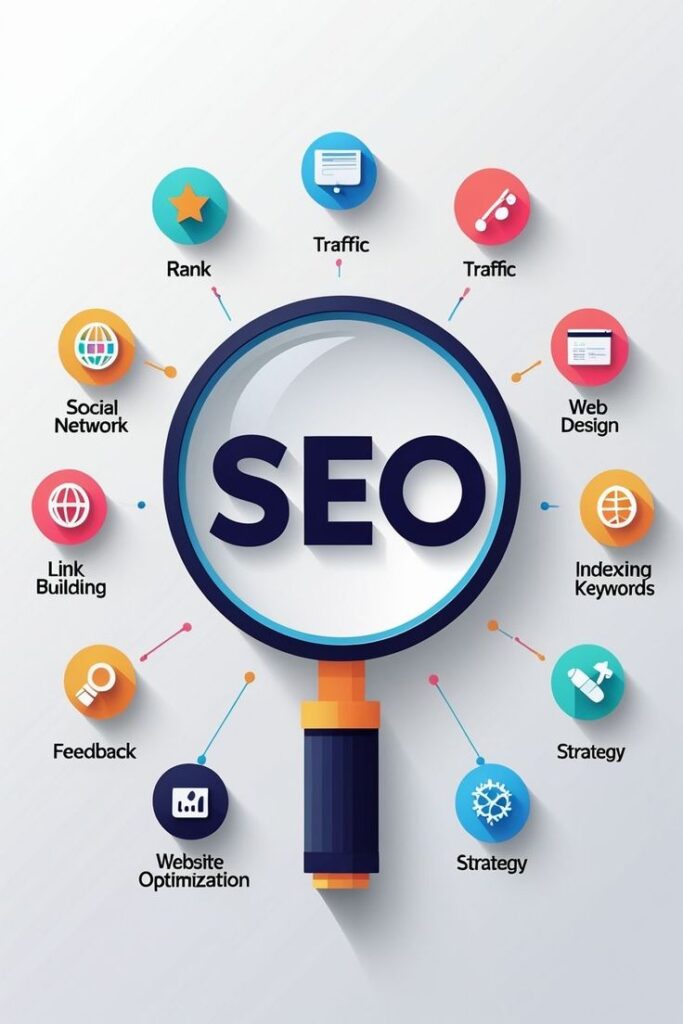
Search Engine Optimization, commonly known as SEO, has become one of the most important parts of digital marketing. Businesses, bloggers, creators, and brands all want their websites to appear on the first page of Google because visibility creates opportunities, traffic, leads, and sales. If you are new to SEO and want to understand how ranking works in modern search engines, this SEO guide for beginners will help you understand everything in simple language.
Many people think SEO is only about adding keywords to a website. In reality, SEO in 2026 has evolved significantly. Search engines now focus on user experience, helpful content, search intent, page speed, mobile optimization, and content quality. Artificial Intelligence is also changing the way search engines understand content. Therefore, understanding the right SEO strategy is necessary.
This SEO guide for beginners explains important SEO concepts, techniques, and methods that can help improve your website rankings.
What is SEO?
SEO stands for Search Engine Optimization. It is the process of improving your website so that search engines can understand your content and show it to users searching for related topics.
For example, if someone searches “best digital marketing agency” or “how to improve website traffic,” search engines analyze millions of pages and display results based on quality and relevance.
The main objective of SEO is to increase organic traffic. Organic traffic means visitors who come to your website naturally without paid advertisements.
This SEO guide for beginners focuses on building a strong foundation before moving into advanced techniques.
Why SEO is Important in 2026
Competition online is increasing every day. Thousands of websites are created daily, making it difficult to stand out. Without proper optimization, even high-quality content may remain invisible.
SEO helps businesses in many ways:
- Increases website visibility
- Generates organic traffic
- Builds brand trust
- Improves user experience
- Increases leads and sales
- Creates long-term growth
Unlike paid advertising where traffic stops after spending money, SEO can provide consistent results over time.
This SEO guide for beginners helps you understand why SEO remains one of the strongest digital marketing strategies.
How Search Engines Work
Before learning SEO techniques, it is important to understand how search engines work.
Search engines mainly follow three processes:
Crawling
Search engines use bots or spiders to discover webpages across the internet.
Indexing
After discovering content, search engines store and organize information in their databases.
Ranking
Search engines analyze different factors and decide which pages should appear first for a specific search query.
This SEO guide for beginners emphasizes understanding search engine behavior because it helps create content that search engines prefer.
Keyword Research: The Foundation of SEO
Keyword research is one of the most important parts of SEO. Keywords are words or phrases users enter into search engines.
Examples:
- Digital marketing services
- SEO tips
- Content marketing strategies
- Website optimization
Finding the right keywords helps you create content that users actually search for.
Popular keyword research tools include:
- Google Keyword Planner
- Ahrefs
- SEMrush
- Ubersuggest
- Google Trends
When doing keyword research:
Look for:
- High search volume
- Low competition
- User intent
- Long-tail keywords
For example:
Instead of targeting:
“SEO”
You can target:
“SEO guide for beginners”
Long-tail keywords generally have better conversion potential.
Understanding Search Intent
One of the biggest ranking factors in modern SEO is search intent.
Search intent means understanding why users are searching for something.
The four main types include:
Informational Intent
Users want information.
Example:
“What is SEO”
Navigational Intent
Users want a specific website.
Example:
“Facebook login”
Commercial Intent
Users compare products or services.
Example:
“Best SEO tools”
Transactional Intent
Users want to buy something.
Example:
“Buy SEO course”
This SEO guide for beginners recommends matching your content with search intent because search engines prioritize relevant results.
On-Page SEO Basics
On-page SEO refers to optimization techniques performed within your website pages.
Title Tags
Your title tag should:
- Include the main keyword
- Stay under approximately 60 characters
- Be attractive
Example:
Complete SEO Guide for Beginners in 2026
Meta Description
Meta descriptions should summarize your page and encourage users to click.
Example:
Learn this complete SEO guide for beginners and improve rankings with practical SEO strategies.
Headings Structure
Use headings properly:
- H1 for main title
- H2 for sections
- H3 for subsections
This improves readability.
URL Optimization
URLs should remain short and simple.
Good example:
yourwebsite.com/seo-guide-for-beginners
Bad example:
yourwebsite.com/page123?id=987seo
Internal Linking
Internal links connect pages within your website and help users navigate content easily.
For example, if you have a blog about digital marketing strategies, you can link to SEO-related articles.
This SEO guide for beginners strongly recommends proper internal linking.
Content Optimization in SEO
Content remains one of the most important ranking factors.
Creating content is not enough. You need optimized content.
Good content should:
- Solve user problems
- Be easy to read
- Include relevant keywords naturally
- Provide value
- Answer common questions
Search engines prefer helpful content over keyword stuffing.
When writing content:
Use short paragraphs.
Use subheadings.
Add examples.
Add statistics where relevant.
Maintain readability.
This SEO guide for beginners suggests focusing on user value first.
Technical SEO for Beginners
Technical SEO improves the backend performance of your website.
Important factors include:
Website Speed
Slow websites create poor user experiences.
Ways to improve speed:
- Compress images
- Use caching
- Reduce unnecessary scripts
- Use faster hosting
Mobile Optimization
Most users browse through mobile devices.
Your website should:
- Adjust to different screen sizes
- Load quickly
- Be easy to navigate
Secure Website
Install SSL certificates.
Websites should use:
HTTPS
instead of:
HTTP
XML Sitemap
A sitemap helps search engines discover important pages.
Robots.txt File
This file tells search engines which pages to crawl.
This SEO guide for beginners recommends checking technical SEO regularly.
Off-Page SEO Strategies
Off-page SEO refers to activities outside your website that improve authority.
The most important factor is backlinks.
Backlinks are links from other websites pointing to your website.
Search engines often consider backlinks as signals of trust.
Ways to build backlinks:
- Guest blogging
- Creating valuable content
- Business directories
- Influencer collaborations
- Sharing research and data
Avoid buying low-quality backlinks because they can harm rankings.
This SEO guide for beginners focuses on quality rather than quantity.
Local SEO for Businesses
Local SEO helps businesses appear in location-based searches.
For example:
- Digital marketing agency near me
- Best café in Delhi
- Real estate company in Noida
To improve local SEO:
- Create a Google Business Profile
- Add contact details
- Use location keywords
- Collect customer reviews
- Maintain consistent business information
Local SEO is highly important for businesses targeting nearby customers.
Common SEO Mistakes Beginners Make
Many beginners make mistakes that reduce ranking opportunities.
Avoid these mistakes:
- Keyword stuffing
- Duplicate content
- Ignoring mobile users
- Slow websites
- Poor quality backlinks
- Missing meta descriptions
- Weak internal linking
- Ignoring user intent
This SEO guide for beginners recommends focusing on quality content rather than shortcuts.
Future of SEO in 2026
SEO is changing rapidly because Artificial Intelligence and user behavior continue to evolve.
Some important trends include:
- AI-powered search
- Voice search optimization
- User experience signals
- Video SEO
- Visual search
- Personalized search results
- Helpful content updates
Businesses that adapt early usually gain advantages.
This SEO guide for beginners encourages learning continuously because SEO evolves every year.
Conclusion
SEO is no longer only about rankings. It is about creating better experiences for users and providing valuable information. Beginners often become overwhelmed because SEO includes many elements, but success comes from consistent learning and implementation.
Start by understanding keywords, improving content quality, optimizing website performance, and creating useful information for users. Gradually, you can move toward advanced strategies.
If you are beginning your digital journey, this SEO guide for beginners provides a strong starting point to understand how modern SEO works and how websites can build long-term visibility on search engines.
By applying the techniques discussed in this SEO guide for beginners, you can gradually improve rankings, increase traffic, and create sustainable online growth for your website.
This is one of the most practical and beginner-friendly SEO guides I’ve read for 2026. The way complex concepts are broken down into actionable steps makes it incredibly valuable for anyone starting their SEO journey. I especially liked the focus on modern SEO trends, user intent, and AI-driven search evolution — very relevant for today’s digital landscape. Great work by the YB Growth Labs team for creating content that is both educational and easy to implement. Looking forward to reading more insightful blogs like this!