
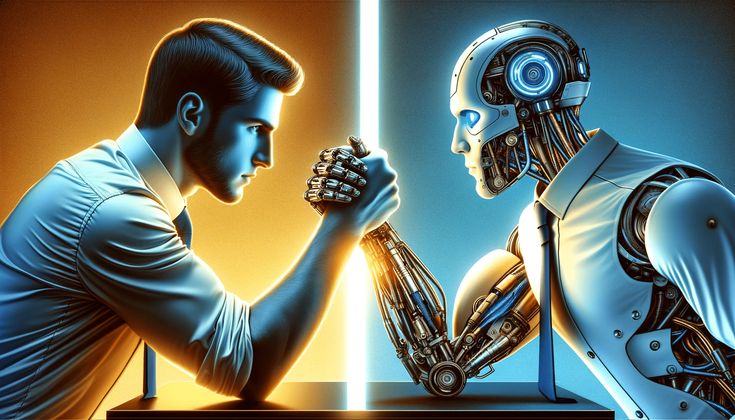
Artificial Intelligence has become one of the most talked-about technologies in recent years. From writing articles and generating images to composing music and creating videos, AI is transforming industries at an incredible speed. As AI tools become more advanced, an important question continues to emerge: Can AI replace human creators?
The debate around AI vs Human Creativity is becoming stronger because AI now produces content that often looks impressive. Businesses, content creators, marketers, and designers are using AI to save time and improve productivity. However, creativity has traditionally been considered one of the most unique human abilities.
In this article, we will explore AI vs Human Creativity, compare strengths and limitations, and understand whether AI can truly replace creators in the future.
Understanding Artificial Intelligence in Creative Work
Artificial Intelligence refers to machines and software systems designed to perform tasks that usually require human intelligence.
Modern AI tools can:
- Write blogs and articles
- Generate images
- Create videos
- Produce music
- Suggest design ideas
- Generate marketing content
- Assist in coding
AI learns patterns from large amounts of data and uses those patterns to create outputs. While this process appears creative, AI works differently from humans.
Human creativity often comes from emotions, experiences, imagination, and personal understanding.
This difference is at the center of the discussion around AI vs Human Creativity.
What Is Human Creativity?
Human creativity is the ability to generate original ideas by combining knowledge, experiences, emotions, and imagination.
Creative thinking includes:
- Problem-solving
- Storytelling
- Emotional expression
- Innovation
- Artistic thinking
Humans create because they feel emotions, face challenges, and experience life differently.
For example:
A writer may create a powerful story inspired by personal experiences.
A musician may compose music based on emotions.
A designer may create visuals based on cultural understanding.
These human elements are difficult for machines to truly replicate.
AI vs Human Creativity: Major Differences
Understanding the key differences can help explain why this debate continues.
Human Creativity Strengths
Humans can:
- Feel emotions
- Understand context deeply
- Think outside existing patterns
- Create meaningful stories
- Develop unique perspectives
AI Strengths
AI can:
- Process huge amounts of information
- Generate content quickly
- Analyze data rapidly
- Automate repetitive tasks
- Improve productivity
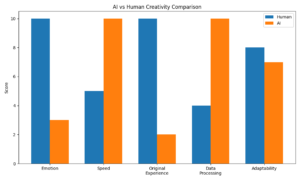
Both have unique strengths, which makes AI vs Human Creativity more of a partnership than a competition.
Can AI Replace Content Creators?
Many people worry that writers, designers, marketers, and artists could lose opportunities because of AI.
The reality is more complex.
AI can create:
- Blog drafts
- Social media posts
- Marketing copy
- Images
- Video scripts
However, AI usually depends on existing information and patterns.
Human creators add:
- Personal experiences
- Emotional storytelling
- Brand identity
- Cultural understanding
- Creative direction
For example, AI can generate a blog article quickly, but a skilled writer can add personality and authenticity that connects with readers.
Therefore, in the debate of AI vs Human Creativity, AI currently acts more as an assistant rather than a complete replacement.
Areas Where AI Performs Better
AI has several advantages in specific tasks.
Speed and Efficiency
Humans may spend hours creating drafts.
AI can generate ideas within seconds.
Data Analysis
AI processes large amounts of information quickly.
Businesses use AI for:
- Customer insights
- Market analysis
- Trend prediction
Repetitive Tasks
AI is effective for repetitive creative tasks such as:
- Caption generation
- Template creation
- Content suggestions
This saves time for creators.
Areas Where Humans Still Lead
Despite technological progress, humans still dominate several aspects of creativity.
Emotional Intelligence
Human emotions strongly influence creativity.
AI can imitate emotional language but does not actually feel emotions.
Original Thinking
Humans often create ideas that challenge existing rules.
Many innovations happen because people think differently.
Personal Experiences
Life experiences shape creativity.
AI does not have memories, relationships, or personal journeys.
This is why human storytelling often feels more authentic.
How AI Is Helping Creators Instead of Replacing Them
The discussion around AI vs Human Creativity should not always focus on replacement.
Many creators use AI as a productivity tool.
Examples include:
Writers
AI assists with:
- Content ideas
- Outlines
- Research
Designers
AI helps with:
- Visual concepts
- Quick drafts
- Editing
Digital Marketers
AI improves:
- Keyword research
- Content planning
- Audience analysis
Video Creators
AI assists with:
- Script generation
- Automatic editing
- Voice generation
Rather than replacing humans, AI often reduces workload.
Challenges of AI in Creative Industries
Although AI offers many benefits, some concerns remain.
Copyright Issues
Questions arise about:
- Ownership of AI-generated content
- Use of training data
- Intellectual property rights
Lack of Originality
AI learns from existing patterns.
This sometimes creates content that feels repetitive.
Ethical Concerns
Concerns include:
- Misinformation
- Fake content
- Deepfake technology
Responsible use of AI is important.
Future of AI vs Human Creativity
Artificial Intelligence will continue becoming more advanced.
Future developments may include:
- Better personalization
- Improved AI-generated media
- Smarter creative assistance
- Advanced automation
However, experts believe that human creativity will remain important.
The future may not involve AI replacing humans completely.
Instead, humans and AI may work together.
Creators who learn to use AI effectively may gain advantages over those who ignore it.
How Businesses View AI vs Human Creativity Today
The conversation around AI vs Human Creativity has become important for businesses across different industries. Companies are using AI tools to speed up processes, reduce costs, and improve productivity. However, many organizations still prefer human creators because originality and emotional connection remain essential for customer engagement. The debate of AI vs Human Creativity is no longer about choosing one over the other; instead, many businesses are finding ways to combine both for better results.
For example, marketing agencies often use AI to generate content ideas and automate repetitive tasks, while human teams focus on strategy and storytelling. This balance shows that AI vs Human Creativity is creating new opportunities rather than eliminating creative jobs completely.
Why Human Emotions Matter in AI vs Human Creativity
One of the biggest differences in AI vs Human Creativity is emotional understanding. Human beings create content based on feelings, memories, experiences, and personal perspectives. These emotional elements help people connect with stories, videos, music, and artwork.
AI can analyze language patterns and imitate emotional expressions, but it does not truly experience emotions. This is why the discussion of AI vs Human Creativity continues to be important in creative industries. Content that creates strong emotional reactions often comes from human experiences rather than machine-generated patterns.
How Content Creators Can Benefit from AI vs Human Creativity
Many creators worry about losing opportunities because of AI. However, understanding AI vs Human Creativity can actually help creators improve their work. Instead of viewing AI as competition, creators can use it as a support tool.
Content creators can use AI for:
- Content ideas
- Blog outlines
- Keyword research
- Social media planning
- Video scripts
- Productivity improvement
At the same time, creators can add their personal voice and originality. The future of AI vs Human Creativity may involve humans using AI to create stronger and more engaging content.
Conclusion
The debate around AI vs Human Creativity continues as technology evolves rapidly. AI can generate content faster, process large amounts of information, and automate repetitive work. However, human creativity involves emotions, imagination, experiences, and unique perspectives that machines cannot truly replicate.
AI is changing how creators work, but it is not necessarily replacing them. The most likely future is collaboration, where humans use AI tools to enhance creativity rather than compete against it.
Creators who embrace technology while maintaining originality and emotional connection may continue to succeed in the digital world.